Seoul Subway With Luggage, Strollers or Wheelchairs
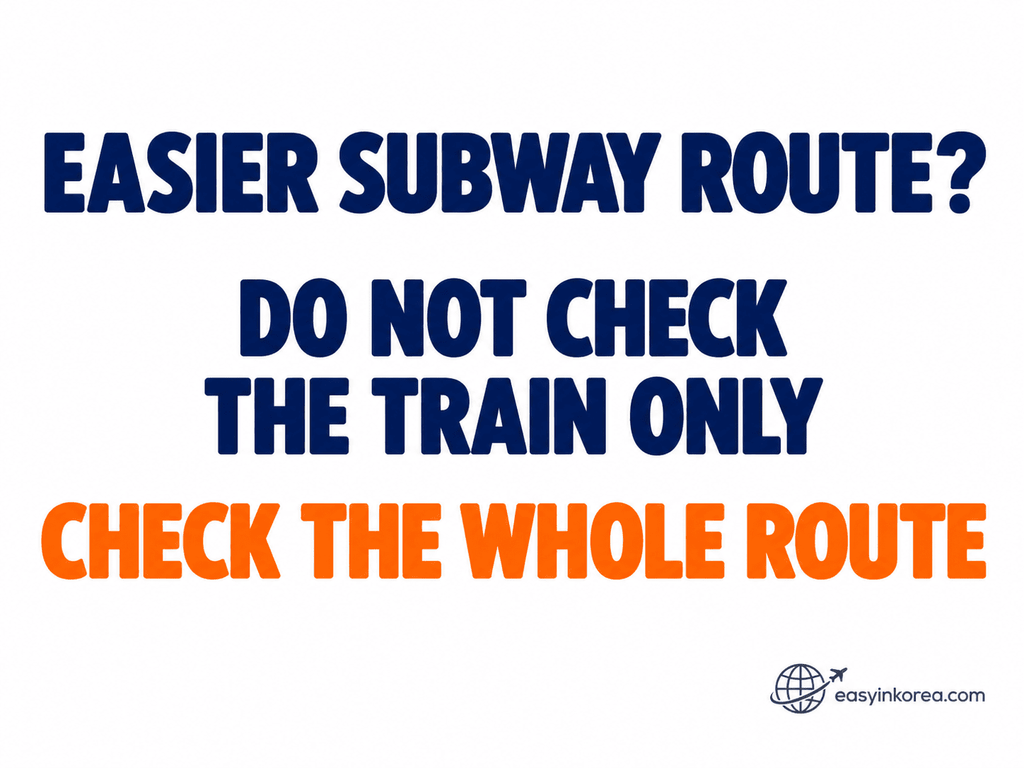
Start with the parts of the journey that can change your decision: the station entrance, platform access, transfers and destination exit.
If one of those steps creates a barrier for your luggage, stroller or wheelchair, compare another route before you commit to the trip.
If you are planning to use the Seoul Subway With Luggage, a stroller or wheelchair, do not compare routes only by travel time.
The train ride is only one part of the journey.
Think about the complete physical route:
STREET → ENTRANCE → GATE → PLATFORM → TRANSFER → EXIT → DESTINATION
A route that looks slightly longer on a map may remove a difficult transfer, reduce repeated level changes or give you a more usable arrival path.
Instead of asking only, “Which train is fastest?”, ask: “Which complete route can I actually use more easily?”
This guide helps you make that decision before you commit to a difficult path.
Quick Answer: Choose the Route You Can Actually Use
Before choosing a subway route, check the journey in this order:
1. Departure station:
Can you enter the station without depending on a staircase you cannot comfortably use?
2. Platform:
Is there a usable path from the entrance level to the platform you need?
3. Transfers:
How many times must you change lines, and will those transfers add long corridors or repeated level changes?
4. Arrival station:
Can you reach a suitable exit from the arrival platform?
5. Street after the exit:
Does that exit leave you on a practical route to your final destination?
6. Backup:
If one required path is unavailable or unclear, know what you will check next.
A few extra minutes can be a reasonable trade-off when they remove a difficult transfer or physical barrier from your journey.
Travelers Wish They Knew This Before Choosing a Route
Seoul subway stations can have elevators, escalators, wheelchair lifts, accessible restrooms and other accessibility facilities.
But the facilities and station layouts are not identical at every station.
One elevator may connect the street and concourse. Another may be needed between the concourse and platform. A transfer can add more level changes.
The exit closest to your destination may also be different from the exit connected to the easier path through the station.
Remember this distinction:
FACILITY EXISTS ≠ YOUR WHOLE ROUTE IS CONFIRMED
Check the journey as a connected path instead of treating one elevator symbol as the answer to the entire trip.
Quick Navigation
Check the Whole Subway Route Before You Leave
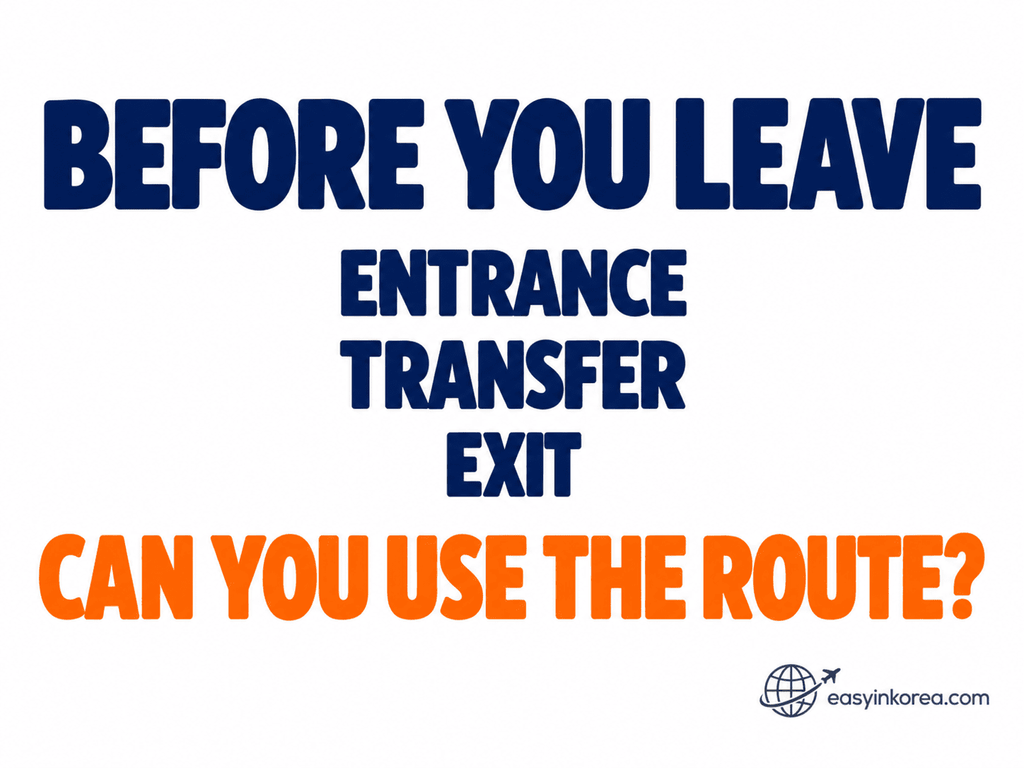
Now compare the physical effort behind each route option. A small difference in travel time can hide a much bigger difference in stairs, level changes and walking distance.
Use those differences to decide which journey deserves a closer accessibility check before you enter the station.
A route-planning app can help you choose subway lines and stations. For an easier journey, add a second check for the physical route.
Check the departure station
Start outside the station. Think about how you will move from street level toward the gate and then to the platform you need.
Do not assume that the closest staircase entrance is the entrance you should use.
Check every transfer
A transfer can add corridors, elevators, escalators and several changes of level.
If two routes have similar travel times, compare their transfer complexity before choosing.
Check the arrival station
Your physical journey is not complete when the train reaches the station. You still need a usable path from the platform toward street level.
Check what happens after the exit
An exit can be easier inside the station but leave you farther from your destination.
Compare both parts: STATION ACCESS + STREET JOURNEY.
Check Elevators Before You Commit to the Route

Think in connections rather than elevator symbols. One part of the journey may take you from street level to the concourse, while another connection may still be needed to reach your platform.
Map the next physical step first. Then follow the current station signs for the route you actually need.
Official Seoul accessibility information lists subway facilities by station, including elevators and other mobility-support facilities.
Use that information as a starting point. Do not assume that one elevator creates a direct route through every part of the station.
Ask what the elevator connects
You may need different elevators for different parts of the journey.
Think in connections:
STREET → CONCOURSE → GATE → PLATFORM
At a transfer station, the journey may include more connections before you reach the next platform.
Follow current station information
Once inside the station, use the current elevator and accessibility signs for the path in front of you.
Do not rely on a remembered screenshot, a floor color or an old route description when current station information shows something different.
Separate installed facilities from current availability
A facility list can tell you that an elevator is installed at a station. That is different from confirming that the elevator is available at the exact time of your trip.
When a step-free path is essential, check current information and ask station staff if the usable route is unclear.
Choose an Easier Transfer, Not Just a Faster One
When comparing routes, count transfers as well as minutes.
A direct route or a simpler transfer may be easier with heavy luggage, a stroller or wheelchair even when the estimated journey takes slightly longer.
Do not assume the standard path is your path
The most direct-looking transfer path and the path that works for your mobility needs may be different.
Keep the same target: NEXT LINE → CORRECT DIRECTION → CORRECT PLATFORM.
Then follow the current usable path that lets you reach that target.
Keep detailed transfer navigation separate
If your route requires changing lines, first decide whether that transfer fits your trip.
Then use current station signs and detailed transfer guidance to reach the next platform.
Check the Destination Exit Before You Arrive
Before arriving, check which exit you intend to use and whether that choice fits your travel condition.
Do not reduce the decision to walking distance alone.
Compare the exit with the street journey
A different exit may require more walking but give you a more usable route to street level.
Another exit may look convenient on a map but leave you farther from the final place you need to reach.
Compare:
USABLE EXIT + STREET JOURNEY + FINAL DESTINATION
Do not assume every exit is equivalent
A station can have accessibility facilities without every individual exit providing the same physical route to street level.
Choose the exit that fits your journey, then use detailed exit navigation when you arrive.
Luggage, Strollers and Wheelchairs Do Not Create the Same Problem
With heavy luggage
The main friction may be lifting a suitcase, using repeated stairs, walking through a long transfer or managing several bags at once.
When using the Seoul Subway With Luggage, compare the physical effort of the route as well as its travel time.
With a stroller
A stroller creates a different problem. You may be managing the stroller, a child and other bags at the same time.
A longer elevator route may therefore be more practical than a shorter route that depends on stairs.
With a wheelchair
The key requirement is not simply convenience. The journey needs a continuous route the traveler can actually use.
Check the relevant station facilities and current path carefully, especially when a particular elevator or accessible connection is essential to completing the trip.
Do not treat wheelchair access as if it were only another luggage-convenience issue.
Use Current Accessibility Information Before a Difficult Trip
Check official station accessibility facilities
Seoul provides station-by-station information for accessibility facilities, including elevators and other mobility-support equipment.
Use this information to understand what facilities are listed at the stations on your planned route.
Use accessibility navigation as another planning layer
Seoul also provides mobility-focused navigation designed to help people who need more accessible routes.
This can add information that a normal shortest-time route does not explain, including physical accessibility and transfer considerations.
Let current conditions override the saved plan
Digital information helps you plan. The station you are standing in is the current physical environment.
If current signs, access conditions or staff instructions differ from your saved route, solve the path in front of you instead of forcing the old plan.
What If the Easier Route Does Not Work?
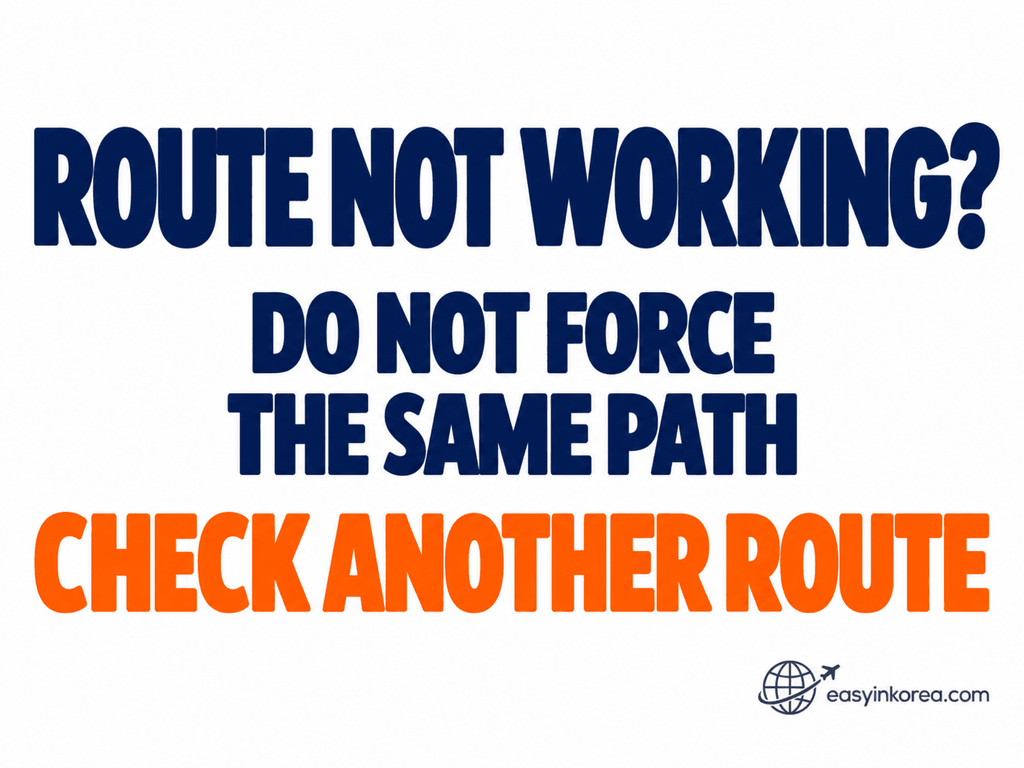
Treat the problem as one broken link in the journey. It may be the elevator connection, a passage, a transfer path or the way to street level.
Once you know which link failed, you can look for the smallest practical change that still gets you toward your destination.
First identify exactly what stopped the journey.
STOP → IDENTIFY THE BLOCKED STEP → CHECK ANOTHER PATH → ASK STAFF → REPLAN IF NEEDED
If you cannot find the elevator
Stop before committing to a path you cannot comfortably use.
Recheck the current station information and look for elevator or accessibility signs. If the path is still unclear, ask station staff.
If the planned path is unavailable
Do not immediately assume that the entire subway journey has failed.
Check whether another elevator, passage, exit or station path can still complete the journey.
If the remaining route does not fit your needs
Reconsider the next part of the trip.
Depending on your travel condition, that may mean using another station, choosing a different subway route or using another transport option for part of the journey.
Recovery means changing the failed step—not automatically restarting the entire trip.
Final Check: Is This Subway Route Actually Easier for You?
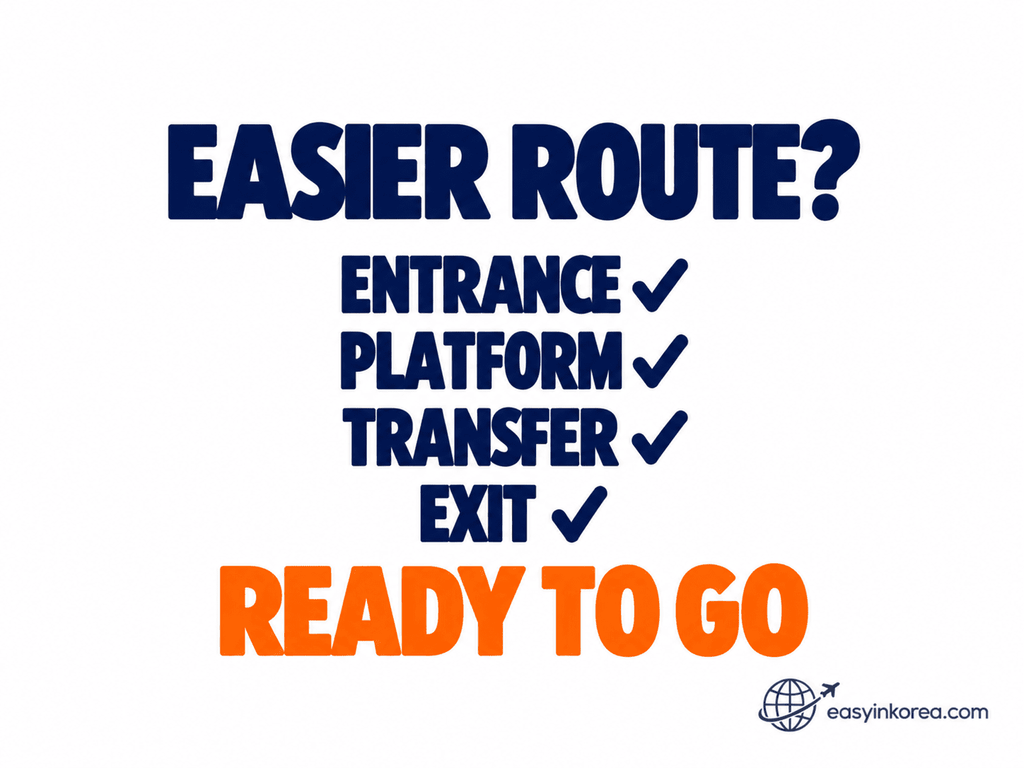
Read the four checks as one connected journey. A route is only as practical as the part that is hardest for you to complete.
If one check is still uncertain, verify that part before departure rather than assuming the rest of the route will solve it.
Before leaving, make one final check:
✓ Departure access considered.
✓ Route to the required platform considered.
✓ Transfers considered.
✓ Destination exit considered.
✓ Final street journey considered.
✓ Backup considered when accessibility is essential.
You do not need the route with the smallest number on the travel-time estimate.
You need a route that fits how you are traveling.
EASIER ROUTE = A ROUTE WITH PHYSICAL BARRIERS YOU CAN MANAGE
Seoul Subway With Luggage, Strollers or Wheelchairs FAQ
Can I use the Seoul Subway with luggage?
Yes. Heavy or multiple bags can make stairs, long corridors and transfers more difficult, so compare the physical route as well as the train time.
Can I use the Seoul Subway with a stroller?
Yes, but the practical route through a station may require elevators and a longer path than the nearest staircase.
Can wheelchair users use the Seoul subway?
Seoul subway stations provide a range of accessibility facilities, but the facilities and physical paths vary by station. Check the stations and connections required for your specific journey.
Does every Seoul subway exit have an elevator?
Do not assume that every exit has the same accessibility. Check the particular station and exit path you intend to use.
Is the nearest exit always the easiest exit?
No. A different exit may provide a more usable route to street level even if it adds some walking.
Is the fastest subway route always easier with luggage?
No. A slightly longer route may remove a difficult transfer, repeated stairs or other physical barriers.
What should I do if I cannot use the elevator route I planned?
Stop before forcing the same path. Check current station information, look for another usable route and ask station staff when the alternative is unclear.
Where can I find exact step-free routes at major tourist stations?
Treat detailed station navigation as a separate problem from choosing the overall subway route. Exact entrance-to-platform and accessible transfer paths should be checked for the specific station, line and direction you need.
Official Sources for Seoul Subway Accessibility
Seoul Metropolitan Government — Subway Accessibility Facilities
Use Seoul’s official station-by-station information to check listed facilities such as elevators, escalators, wheelchair-related equipment and accessible restrooms.
Check Seoul Subway Accessibility Facilities →
Seoul Helping Map
Seoul’s mobility-focused service provides accessibility information and route guidance for people with mobility challenges, including stroller and wheelchair users.
Check Seoul Helping Map Information →
Visit Seoul — Accessibility
Seoul’s official tourism guide explains subway accessibility features for international visitors, including elevators, wheelchair access gates, lifts and other mobility-support facilities.
Check Visit Seoul Accessibility →
Important: listed or installed facilities do not guarantee that a particular path will be available at the exact moment of your trip. Follow current station information and ask staff when a required route is unclear.
Choose the Route That Fits How You Are Traveling
Using the Seoul Subway With Luggage, a stroller or wheelchair becomes easier when you stop treating travel time as the only decision.
UNDERSTAND
The fastest-looking route is not automatically the easiest physical route.
DECIDE
Check the entrance, platform, transfers and destination exit before committing.
ACT
Follow the current accessibility path that fits your travel condition.
RECOVER
If one path fails, identify the blocked step and check another usable route.
COMPLETE
Finish the journey from the first street entrance to the street at your destination.
Remember:
DO NOT CHECK THE TRAIN ONLY → CHECK THE WHOLE ROUTE.