Quick Answer: What Should You Do With Heavy Luggage in Seoul?
Heavy luggage in Seoul does not automatically mean you need a taxi. First decide whether the bag needs to stay with you.
Need to move a large suitcase across Seoul?
First decide whether the bag must stay with you.

First check whether this suitcase is difficult because of its weight, the number of bags, the transfers, or the people traveling with you. That changes every decision that follows.
Start with one question: do you actually need to carry the bag to your next stop?
Compare the complete subway route with a taxi. Check transfers, walking, elevators, passengers, and the number of bags.
Check luggage storage or same-day delivery before carrying a suitcase across Seoul for no reason.
The shortest route is not always the easiest route with luggage
A route that looks simple on a map may include a long station transfer, stairs, a difficult elevator route, or a long walk after you leave the station.
Bag first. Route second. Transport third.
Table of Contents
Is Your Luggage Difficult for This Trip?
Do not decide only by suitcase weight. Check how difficult the bag is for the route you actually need to use.
Can you manage the bag through the whole route?
Check transfers, stairs, elevator access, final walking, and who is traveling.
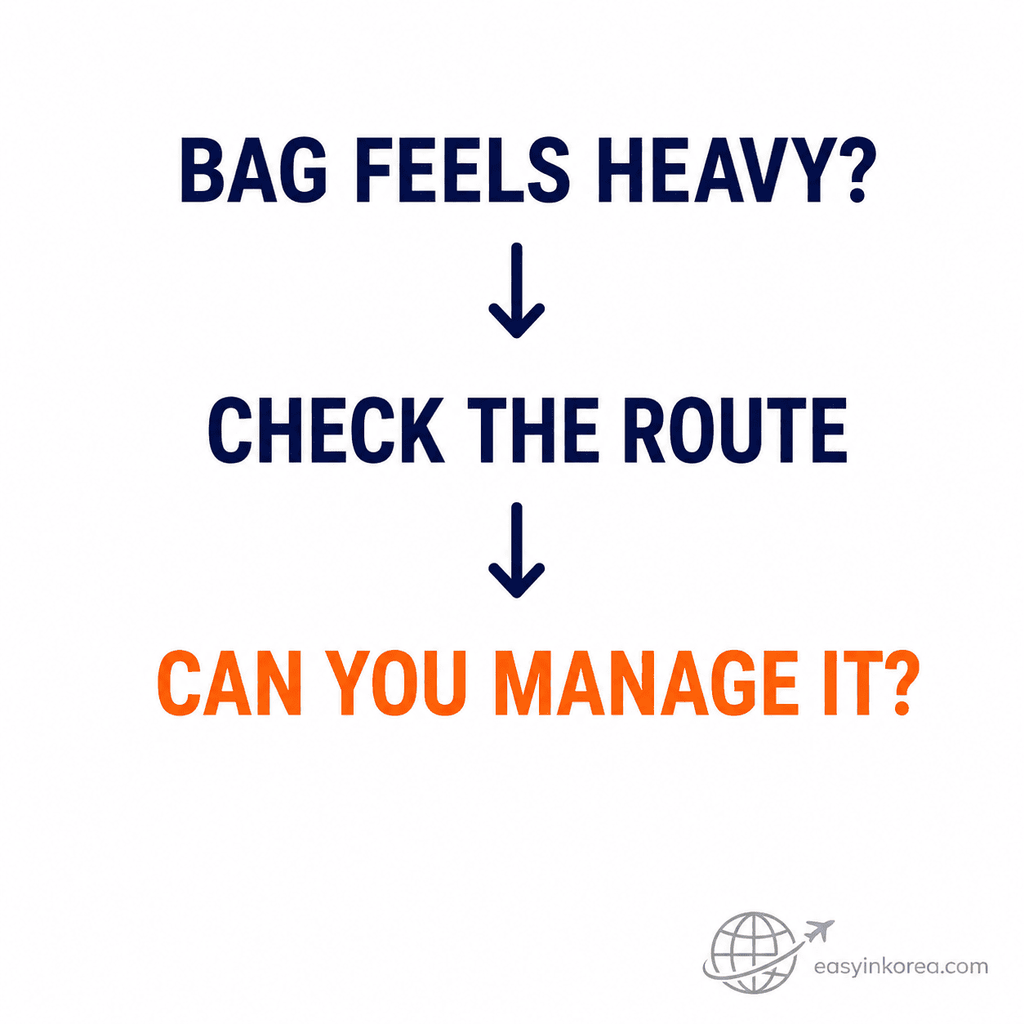
The next decision is whether you need to keep the suitcase with you at all. Removing the bag from part of the day can change every transport option that follows.
There is no useful universal kilogram rule for deciding whether heavy luggage in Seoul should go by subway or taxi.
The same suitcase can be manageable on a direct route and difficult on a route with two transfers, stairs, and a long final walk.
Think about small steps, train gaps, and unavoidable changes in level.
One suitcase and several suitcases create different movement problems.
Each transfer can add walking, elevators, stairs, and platform changes.
Children, seniors, strollers, or limited mobility can change the practical route.
Do You Need to Keep the Bag With You?
Before comparing subway and taxi routes, check whether carrying the suitcase is necessary at all.
Do you need the suitcase with you right now?
If not, compare storage or delivery before planning transport.
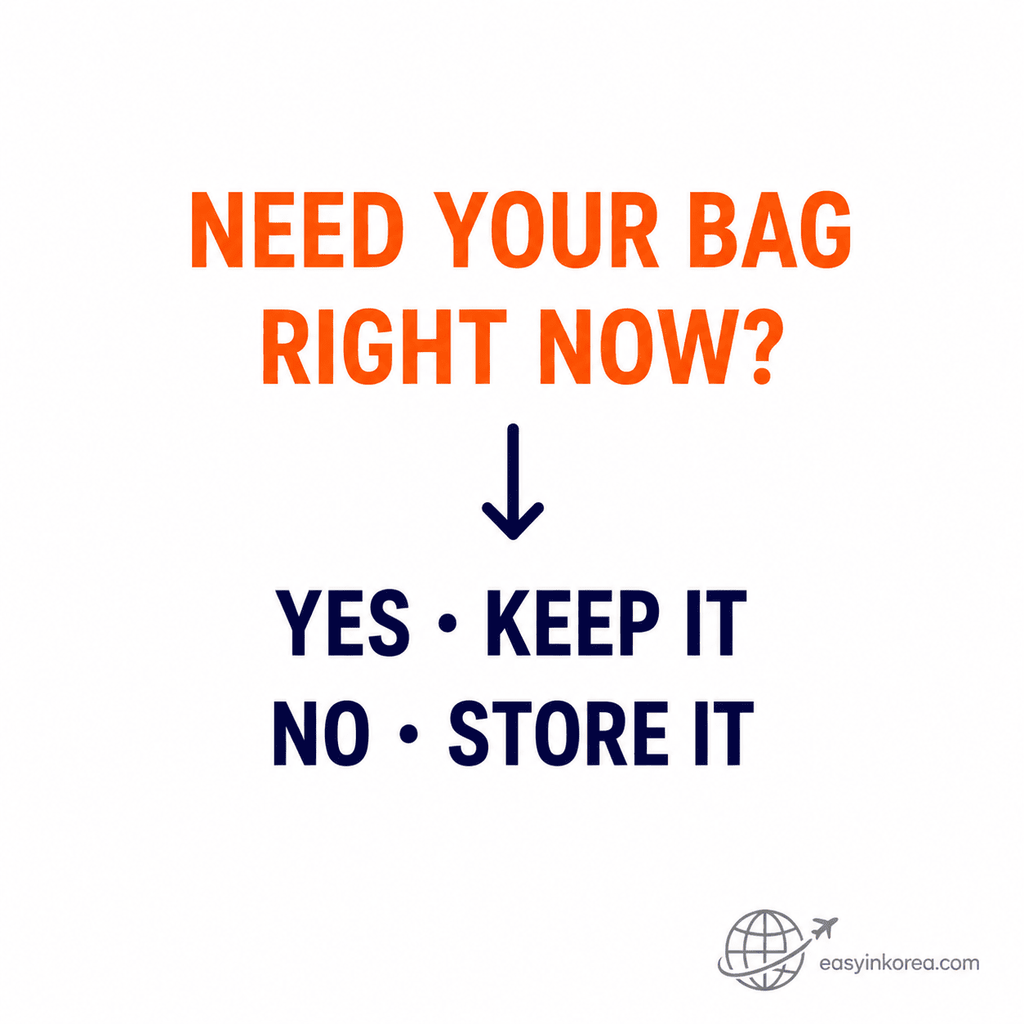
If the suitcase must travel with you, the next step is to check the complete subway journey from entrance to transfer, exit, and final walk before choosing public transport.
This decision can remove the biggest travel problem before you even choose transportation.
Use this path if you are going directly to a hotel, station, airport connection, or another place where you need the luggage.
If you are sightseeing or waiting several hours before check-in or departure, storage or delivery may simplify the rest of the day.
If the bag must stay with you, check the entire subway route before deciding that public transport will work.
Check the Whole Subway Route With Heavy Luggage
A subway route is more than the train line. Check how you will enter, transfer, leave, and walk with the bag.
Subway looks simple on the map?
Check the entrance, transfer, exit, and final walk before you commit.
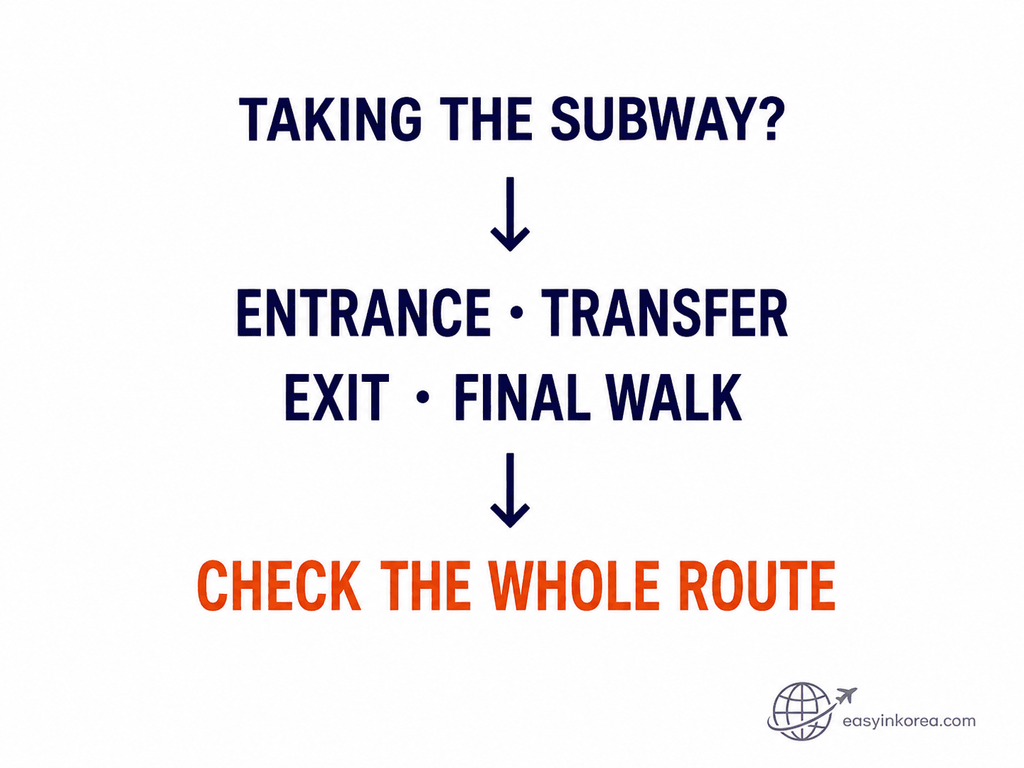
If you depend on an elevator, the next question is whether it connects to the platform, transfer, and exit that your luggage route actually needs.
Seoul provides elevators and other accessibility facilities at many subway stations, but the important question is whether the facilities work for the exact route you need.
Can you reach the platform without carrying the suitcase through a difficult stair route?
Check the actual transfer, not only the number of line changes shown by the app.
The elevator may not be at the exit that looks closest to your destination.
Include sidewalks, slopes, crossings, and the distance from the exit to the real destination.
Station has an elevator ≠ your whole route is step-free
Check the station and exit you actually need before depending on an elevator route.
Check Elevator Access Before You Go
An elevator can solve one part of the route, but only if it connects to the platform and exit you need.
Found an elevator?
Confirm that it connects the direction, transfer, and exit you actually need.
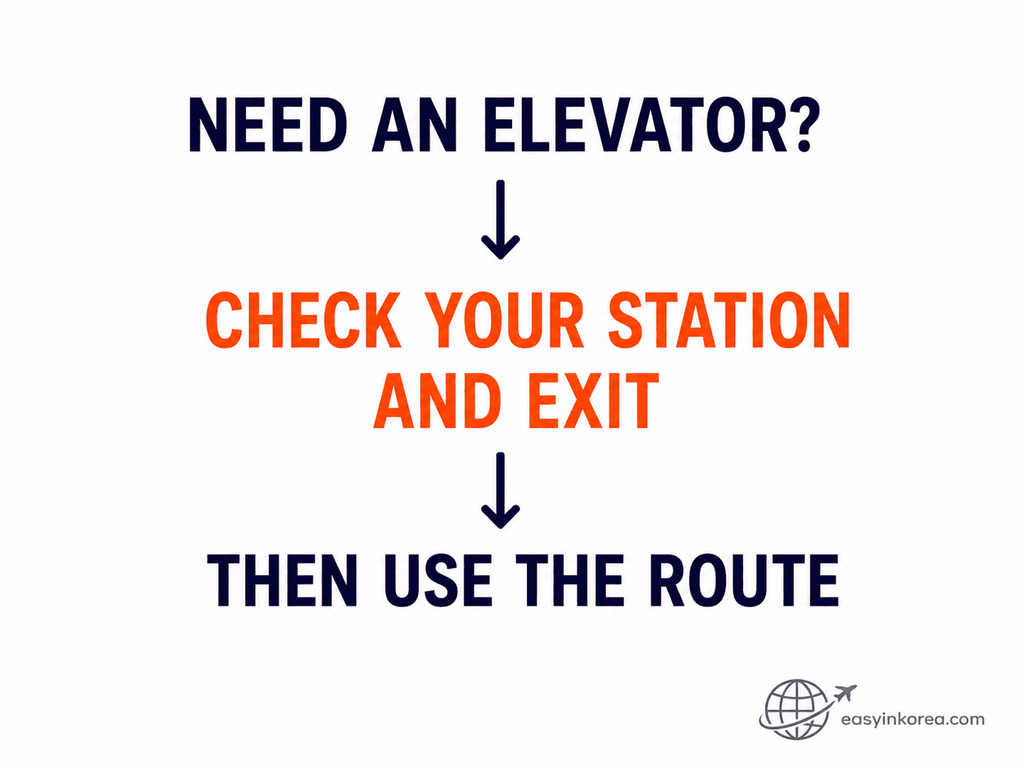
Once the station route is clear, the next question is whether the complete subway journey is still manageable with your bags, transfers, and final walking distance.
Do not search only for “Does this station have an elevator?”
Check where that elevator is and whether it helps with your direction of travel, transfer, and final exit.
✓ Entry route to the platform
✓ Transfer route, if needed
✓ Elevator location at the destination station
✓ Final exit and street-level walking route
If one part of the route becomes difficult with your luggage, compare another exit, another station, or a taxi instead of forcing the original plan.
When Can the Seoul Subway Work With Heavy Luggage?
The subway can still be practical with heavy luggage in Seoul when the complete route stays manageable.
Still considering the subway?
Use the complete route—not the line count—as the decision.
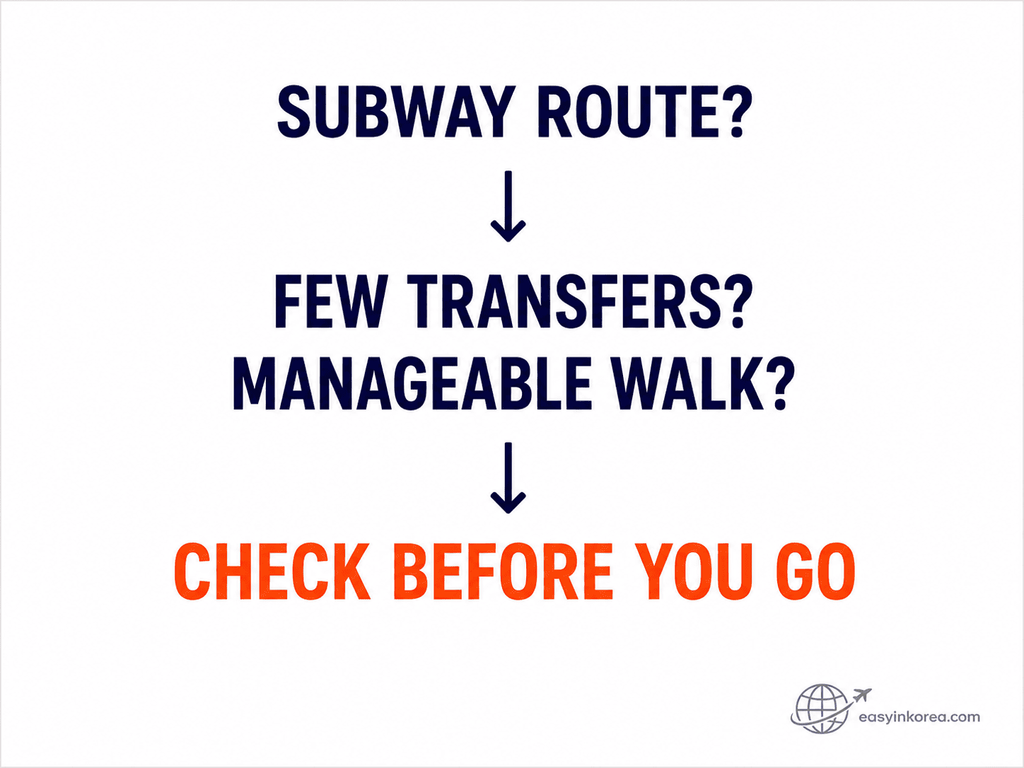
The next step is to identify when transfers, station movement, crowded conditions, or several suitcases make another transport option worth checking.
Do not choose the subway because it is automatically better or cheaper. Choose it when the route works for your actual luggage and group.
A direct ride or simple connection removes repeated station movement.
Confirm the facilities that matter for your exact stations.
You should still be able to control the suitcase during boarding and walking.
The last part of the route should not create a bigger problem than the train itself.
When Does the Subway Become Difficult With Luggage?
A subway trip becomes harder when several small problems appear in the same route.
Are several friction points stacking up?
If yes, compare another route or transport option.
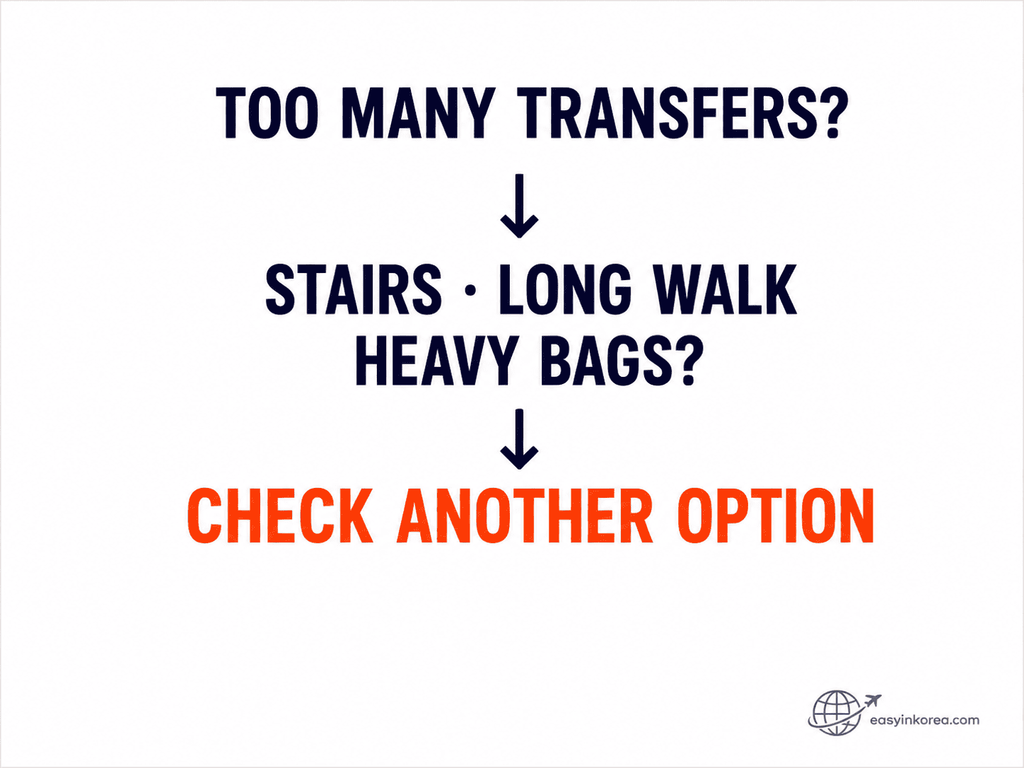
The next step is to compare whether a direct vehicle can remove enough transfers and walking to justify carrying your luggage that way.
One transfer may be easy. Two complicated transfers plus several bags and a long street walk may not be.
• Several transfers
• Long station corridors
• Unclear elevator connection
• Several suitcases
• Long final walk
• A crowded travel period
If the complete subway route looks difficult, compare a taxi before committing to the journey.
Should You Take a Taxi With Heavy Luggage in Seoul?
A taxi can remove transfers and station walking, but first check whether the vehicle fits your passengers and bags.
Would a taxi remove the difficult transfers and walking?
Then check whether the passengers and luggage fit the vehicle.
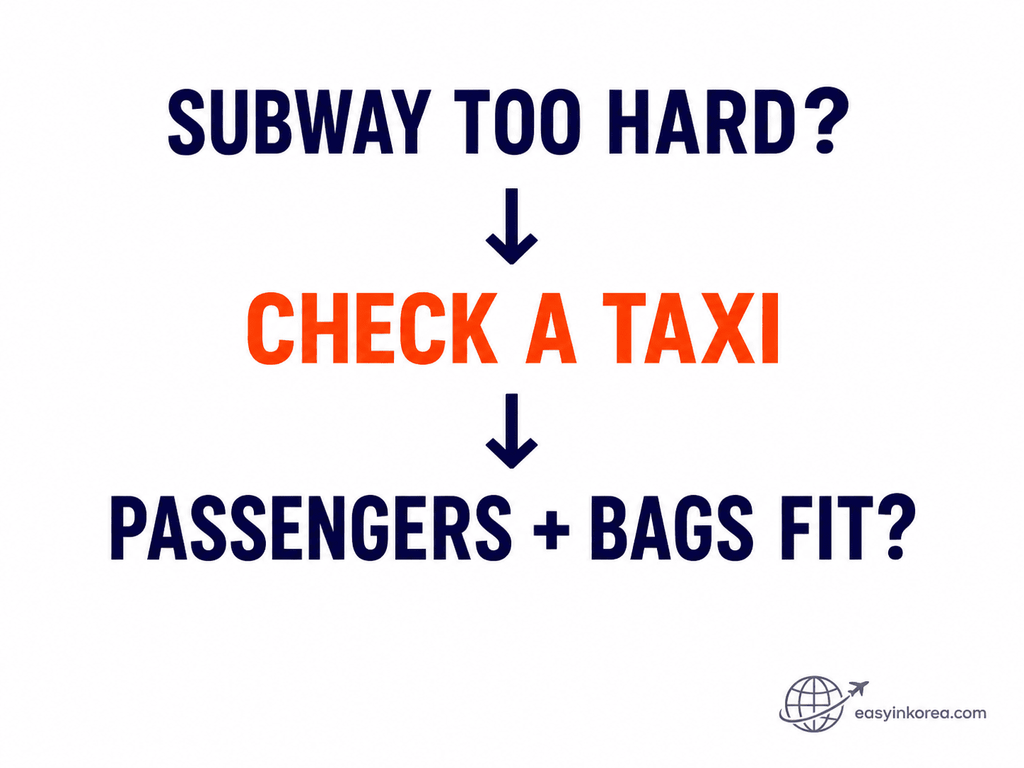
The next check is vehicle capacity. Your passenger count, suitcase size, and number of bags can change which taxi type is practical for the trip.
A taxi becomes worth checking when heavy luggage in Seoul creates several transfer, stair, or walking problems.
Situations that make a taxi worth comparing
Traffic, pickup conditions, vehicle availability, and current fare conditions can change, so compare the real trip instead of assuming a taxi will always be faster.
Will Your Luggage Fit in the Taxi?
Do not assume that every taxi can carry every combination of passengers and suitcases.
Taxi available?
Confirm the actual vehicle can handle your group and bags.
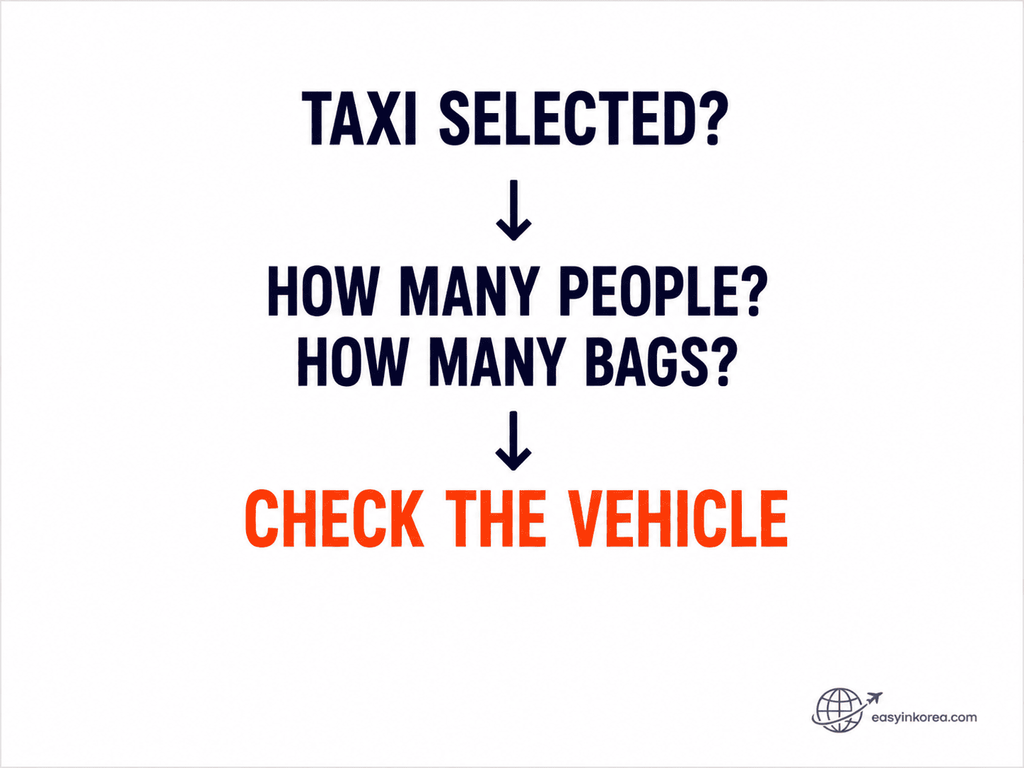
If carrying the suitcase still makes the day inconvenient, the next step is to ask whether the bag needs to travel with you at all or can be stored before you continue.
Vehicle capacity depends on the taxi type, the number of passengers, luggage size, and how the vehicle is configured.
Check the actual passenger-and-luggage combination. Do not depend on a fixed suitcase count.
Check this option when you have a lot of luggage or a larger group.
Avoid promising that a certain number of suitcases will fit. Check the vehicle option for your actual booking.
Would Luggage Storage Make the Trip Easier?
If you do not need the suitcase for the next few hours, storage may remove it from the transport decision completely.
Do you need the suitcase during the next few hours?
If not, compare storage before carrying it through the city.
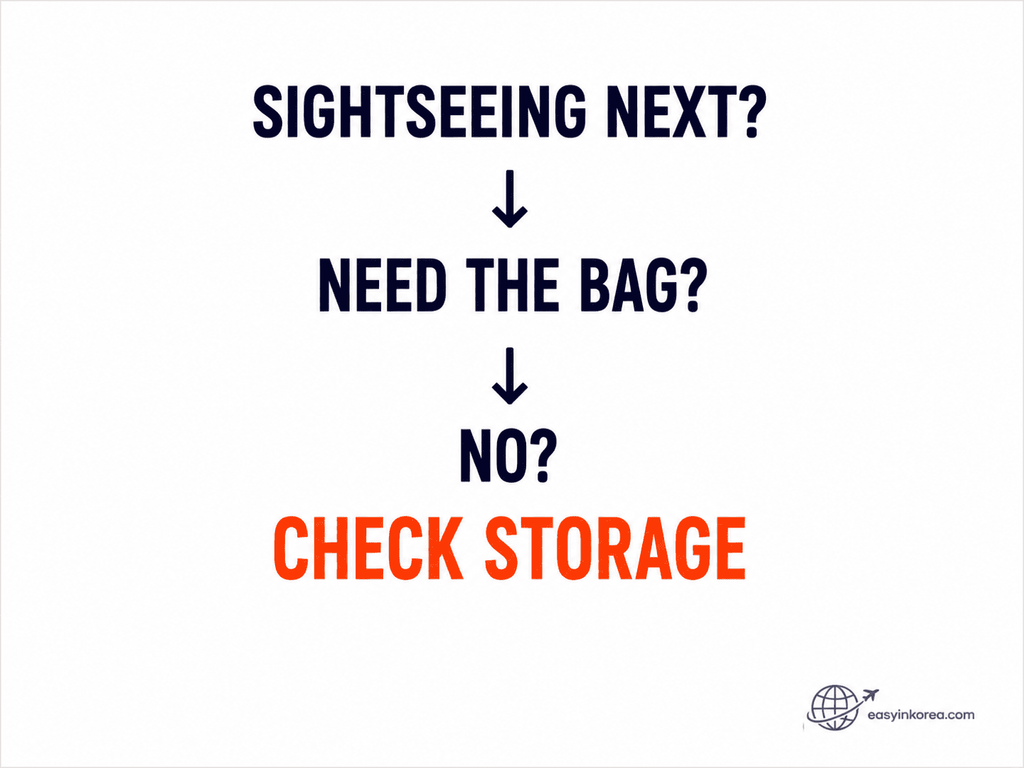
The next step is to check whether a subway locker is available, large enough for your suitcase, and practical for where you will return later.
Storage is useful when your itinerary brings you back to the same area before you need the bag again.
You have several hours before your next check-in or departure.
The suitcase is not needed during the activity.
You can realistically retrieve the bag before the next trip.
Before using a locker or staffed storage service, check location, size, availability, operating conditions, and your retrieval plan.
Can You Use a Seoul Subway Locker?
Seoul subway lockers are useful only when the location, availability, and locker size work for your bag.
Locker location found?
Check availability, size, and retrieval before depending on it.
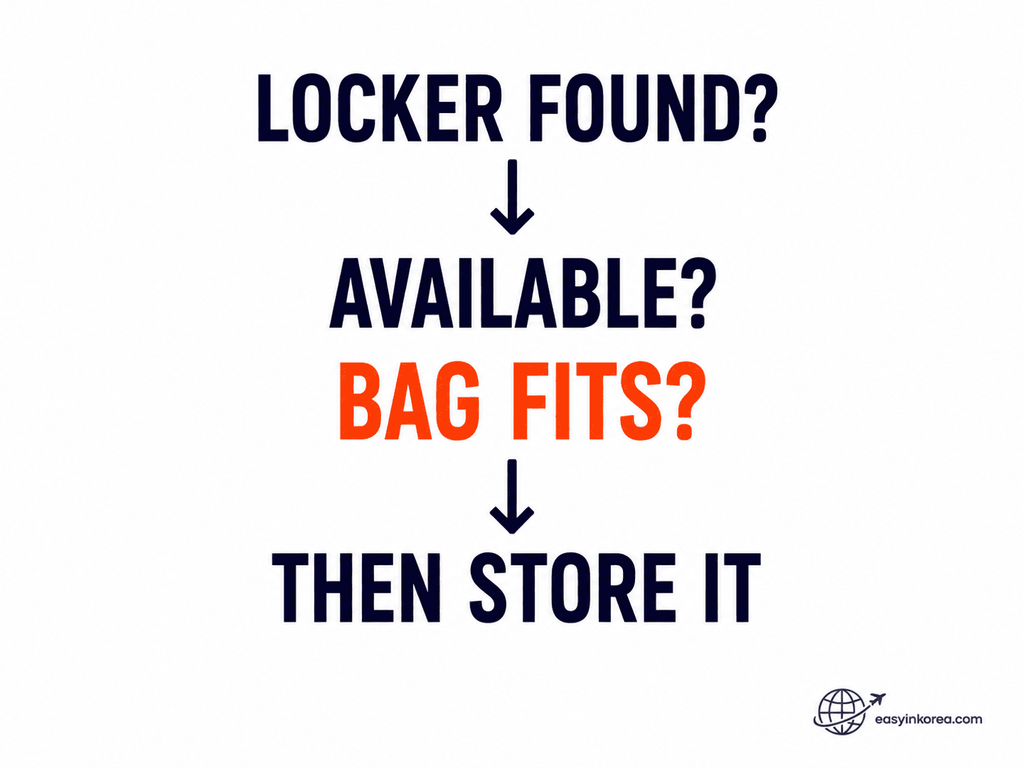
If the suitcase is too large, the right locker is unavailable, or you need more than basic storage, the next step is to check whether T-Luggage fits the problem better.
Seoul’s official T-Locker service provides storage lockers across many subway stations, but availability is not guaranteed when you arrive.
Is there a suitable locker at the station you will actually use?
A locker location does not mean an empty locker will be waiting.
Compare your bag with the current locker dimensions before relying on it.
Make sure you can return before you need to continue the trip.
Current official T-Locker reference
As checked in September 2026, Seoul’s official page lists 336 T-Locker locations across 273 stations, with 5,557 lockers. Treat these numbers as a current reference, not a permanent total.
The official page lists S, M, and L locker sizes and says the process can differ between newer and older locker systems. Check the current locker instructions before depending on one.
Is T-Luggage Better for a Large Suitcase?
If a locker does not fit your suitcase or you need another service, check T-Luggage instead of forcing the bag into a locker.
Locker does not work?
Check T-Luggage or another verified storage option before carrying it again.
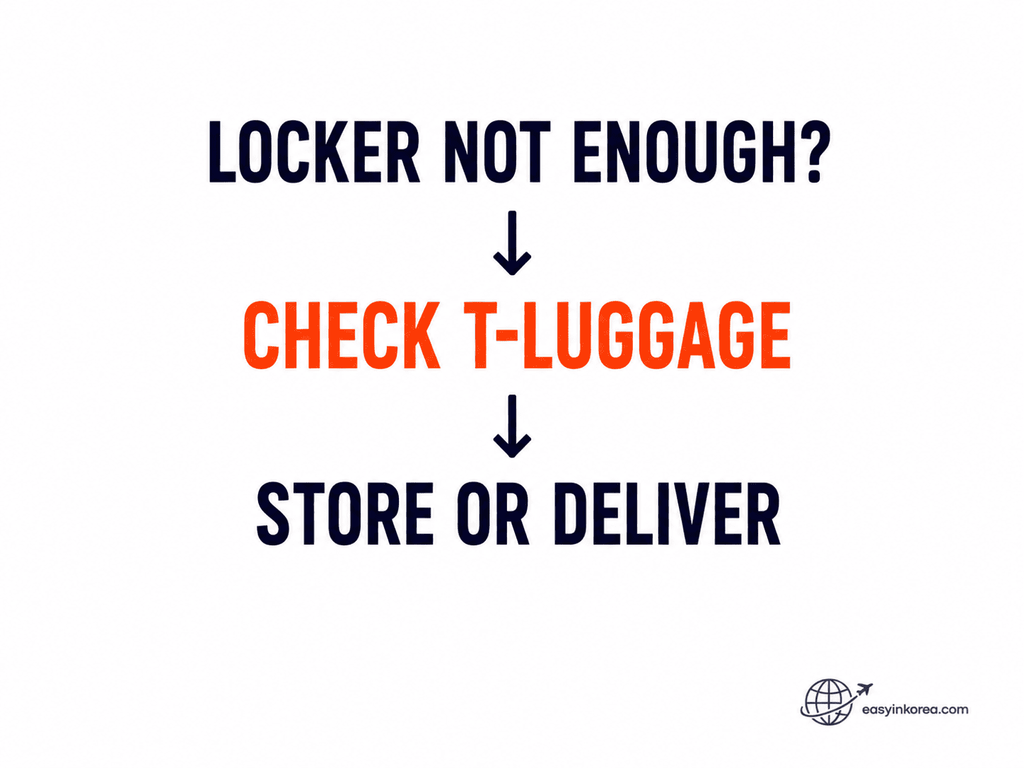
The next decision is whether you will return to the same area to collect the bag or continue somewhere else and need the luggage moved with the trip.
T-Luggage is an official Seoul subway-based service for luggage storage and same-day delivery.
Current reference locations
These locations are a current official reference, not a permanent promise. Check the latest service location, operating conditions, size category, and booking information for your travel date.
If you will return to the same place, storage may work. If you are moving somewhere else, check whether delivery fits the trip better.
Luggage Storage or Same-Day Delivery?
The key question is whether you will return to the same place to collect the bag.
Will you return to the same place for the bag?
If not, compare same-day delivery with normal storage.
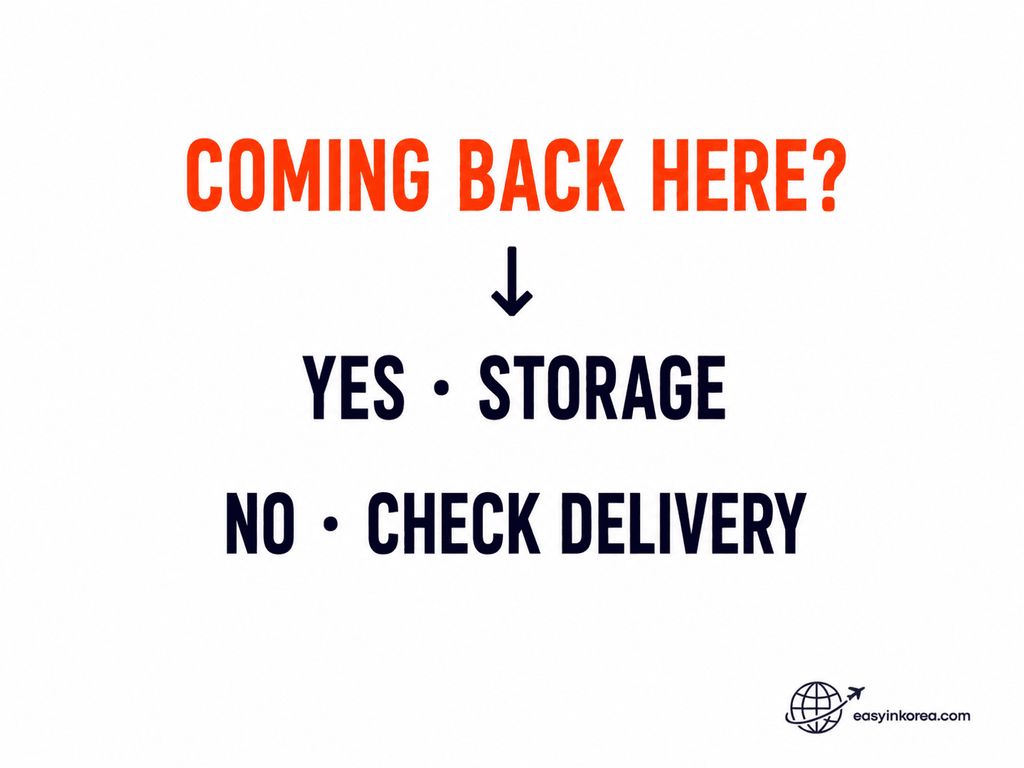
If hotel check-out happens long before your next check-in, train, or flight, the next step is to decide where the bag should stay during that gap.
Check this when you will come back to the storage location before your next departure.
Check this when carrying the bag to another part of the trip would create unnecessary travel.
Delivery availability, accepted route, luggage size, booking conditions, cutoff times, and current fees can change.
Verify the current T-Luggage conditions before building the rest of your day around delivery.
Hotel Check-Out but Your Next Trip Is Later
A long gap between hotel check-out and your next check-in, train, or flight is a luggage problem before it is a transport problem.
Long gap after hotel check-out?
Compare hotel storage, other storage, delivery, or carrying it.
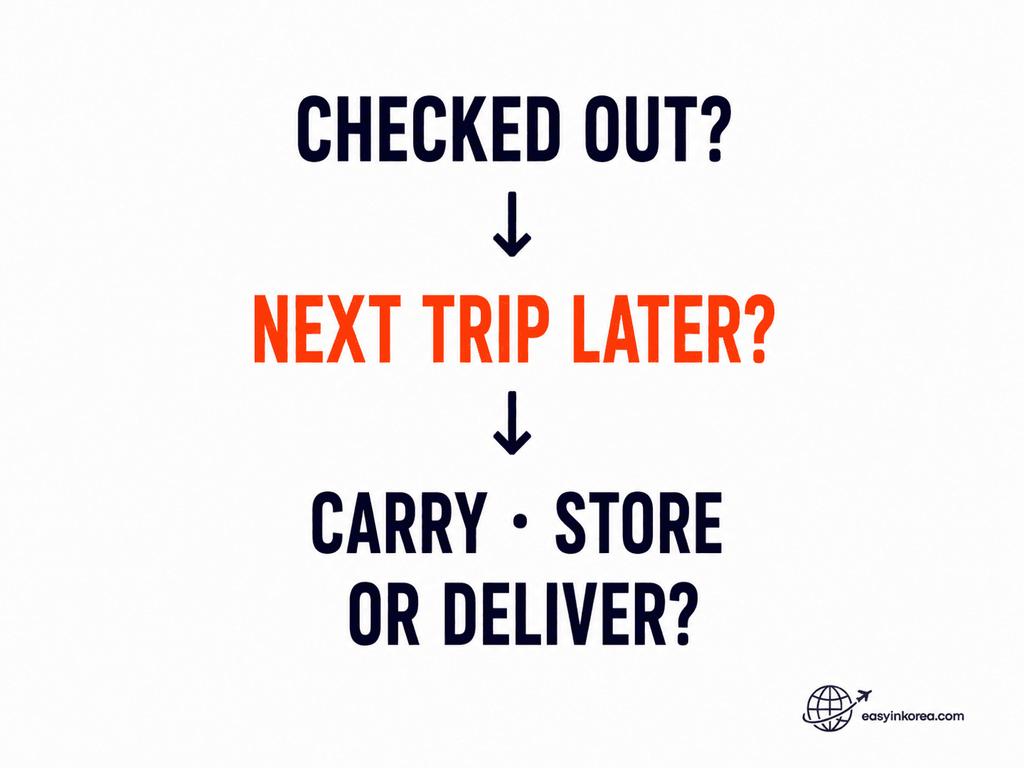
If you are moving from one hotel to another, the next step is to compare the full door-to-door route and decide whether the bag should travel with you or move separately.
First check whether your hotel can hold the luggage under its own current policy.
If that does not work, decide whether you will return to the same area later.
Returning here? → Check storage.
Moving across Seoul? → Compare delivery with carrying the bag.
Going directly to the next hotel or station? → Compare subway and taxi.
Moving Between Two Hotels With Heavy Luggage
Hotel-to-hotel travel is one of the clearest times to compare the full subway route, taxi, and luggage delivery.
Moving between two hotels?
Compare the complete door-to-door route before choosing subway, taxi, or delivery.
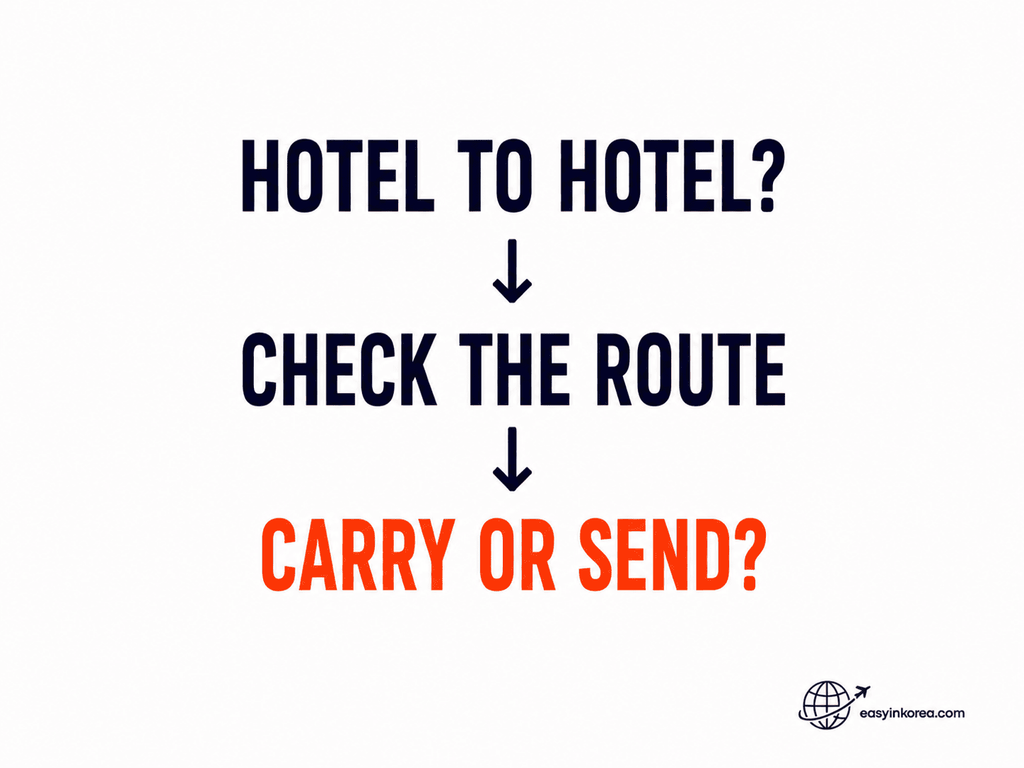
If the elevator route, locker, taxi capacity, or delivery plan does not work as expected, the next step is to change only the part that failed instead of rebuilding the whole journey.
Compare the trip from the first hotel door to the second hotel door, not only the subway travel time between two stations.
Check transfers, elevator route, station exits, and both hotel walks.
Check traffic, pickup point, passengers, luggage, and vehicle type.
Check whether the current service route and timing match both sides of the move.
What If Your First Luggage Plan Does Not Work?
A full locker, difficult elevator route, or unsuitable taxi does not mean you need to force the original plan.
Did one part of the luggage plan fail?
Change that step first instead of rebuilding the whole journey.
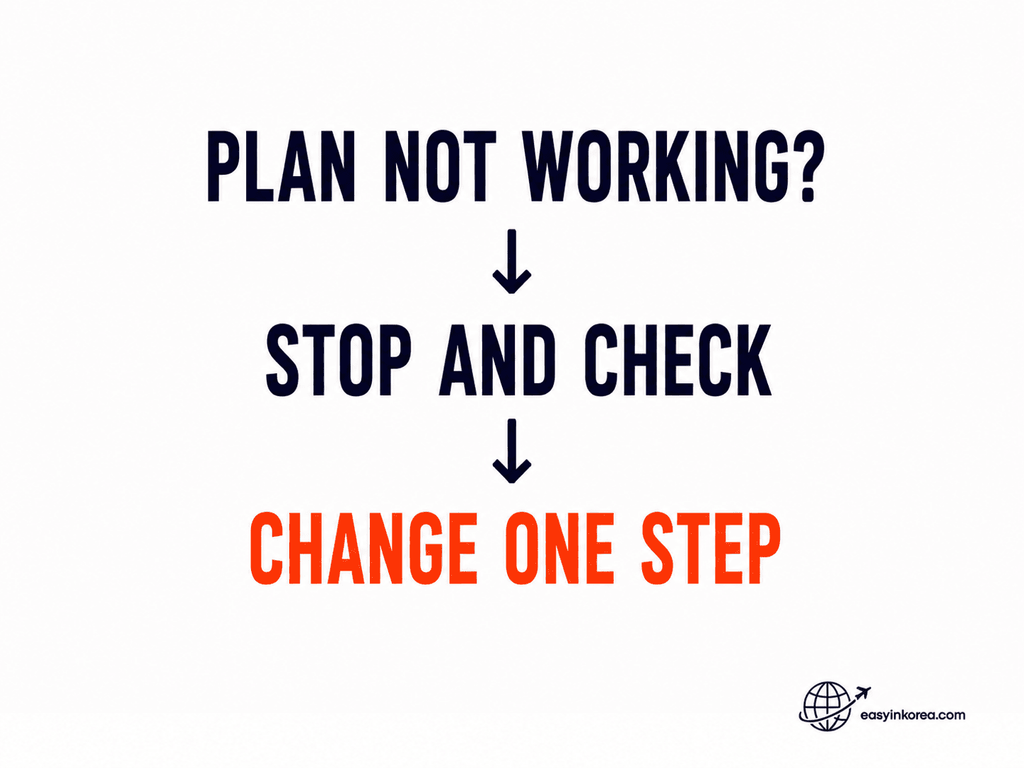
Once the failed step is clear, use the quick decision section to compare the remaining practical options and choose the next route that still works for your bags and itinerary.
Fix the current problem before rebuilding the whole trip.
Heavy Luggage in Seoul: Quick Decision
Use this table when you need to make the next decision quickly.
Need the short decision?
Match the biggest friction point to the next option you should check.
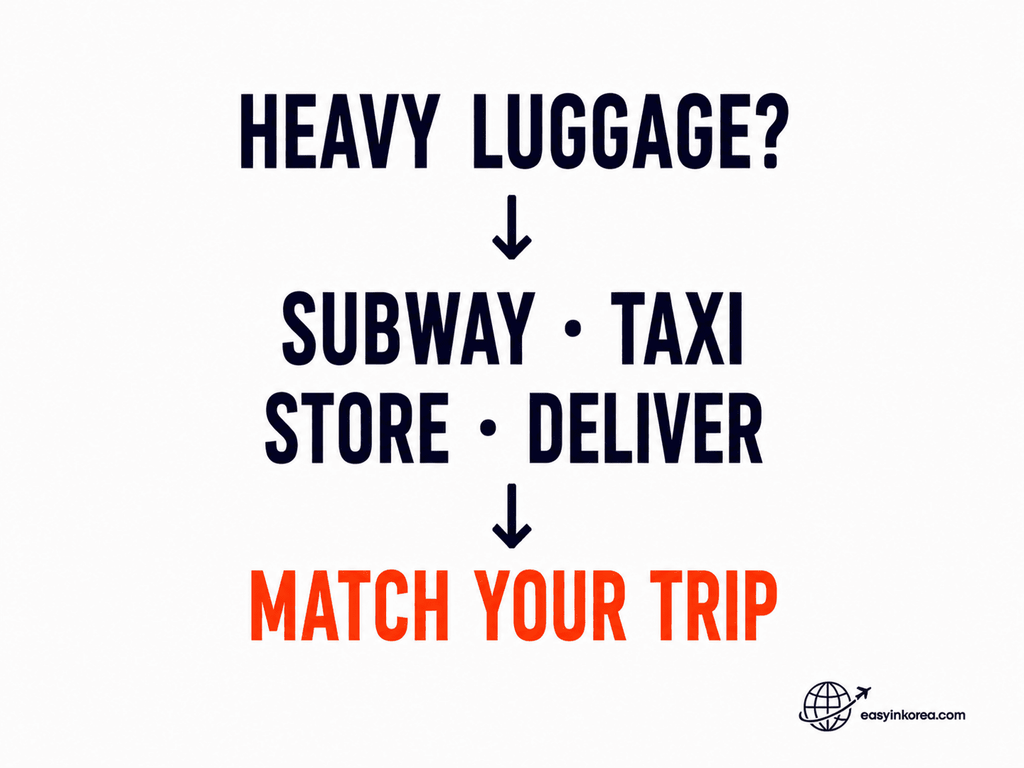
Station access, elevator routes, locker availability, luggage services, and transport conditions can change. Verify the details that affect your route before you leave with the bag.
| Your situation | Check first |
|---|---|
| One manageable bag + simple route | Subway route |
| Several transfers + heavy bags | Taxi |
| Several passengers + several bags | Vehicle size |
| Sightseeing before the next hotel or train | Storage |
| Not returning to the same place | Delivery |
| Suitcase does not fit the locker | T-Luggage or another storage option |
| Elevator route becomes difficult | Another route, station, or taxi |
FAQ About Heavy Luggage in Seoul
These answers depend on your luggage, stations, route, and current service conditions.
Which condition matches your trip?
Use the answer for your actual route, bag, group, and destination.
The questions below separate subway access, taxi capacity, locker use, storage, and delivery so you can verify the condition that matters before taking the next action.
Can I take a large suitcase on the Seoul subway?
A suitcase does not automatically mean you need another transport mode. Check whether you can safely manage the full station, transfer, and walking route with that bag.
Do Seoul subway stations have elevators?
Many stations have elevators and other accessibility facilities. Check the current facility information for the exact station, transfer, and exit you need.
Is a taxi better for heavy luggage in Seoul?
It depends on the whole trip. A taxi may remove transfers and station walking, but check traffic, pickup conditions, vehicle size, passengers, luggage, and current fare conditions.
Will a large suitcase fit in a Seoul taxi?
Do not depend on a fixed suitcase count. Capacity depends on the actual vehicle, number of passengers, and luggage. Check an SUV or van taxi when you have a lot of luggage.
Can I store luggage at Seoul subway stations?
Yes. Seoul currently provides T-Locker at many stations and T-Luggage at selected subway stations. Check the current location, availability, size, and operating conditions. Seoul currently lists T-Locker sizes as S 50×30×60 cm, M 50×45×60 cm, and L 50×90×60 cm (W×D×H).
What if my suitcase does not fit in a locker?
Do not force the bag into the locker. Check T-Luggage or another suitable luggage-storage option.
Can I send my luggage instead of carrying it?
T-Luggage currently offers same-day luggage delivery. Check the current service area, accepted size, booking conditions, timing, and destination before relying on it.
Check Current Official Information
The planning information in this guide was checked in September 2026. Storage locations, locker availability, fees, operating hours, delivery conditions, taxi services, and station facilities can change, so verify only the details that affect your route.
Check elevators, escalators, accessible restrooms, and other station facilities.
Check Official Seoul Information →Check current T-Locker, T-Luggage, storage, delivery, location, size, and operating information.
Check Official Storage Information →Check current taxi types, use information, and fare conditions.
Check Official Taxi Information →Current Seoul storage reference: T-Luggage provides luggage storage and same-day delivery at selected subway stations. T-Locker provides hourly storage across many stations.
Current T-Locker hours: Seoul currently lists 5 AM–12 AM for weekdays, weekends, and holidays; storage and retrieval are unavailable outside those hours.
Accessibility: an elevator listed at a station does not prove your whole route is step-free. Check the exact entrance, transfer, exit, and final walk you need.
Official Closing
You know when to keep the bag, when to compare the subway or a taxi, when storage or delivery may remove the problem, and how to recover if the first plan fails.